California
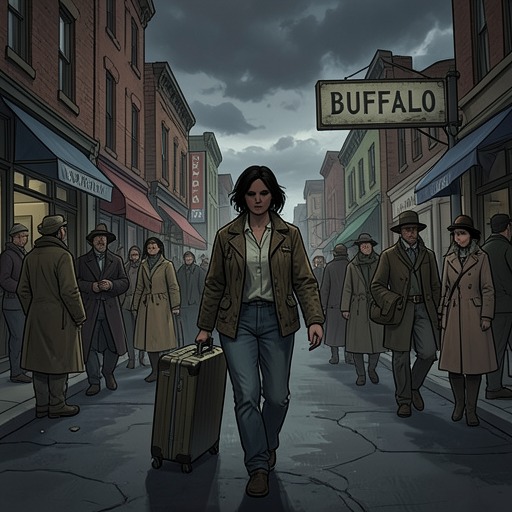
I'm Still Here- What didn't kill me made me stronger and sharperCalifornia functions in the novel as a geographical escape route, a destination of reckoning, and a possible future. Jensen Brick McCall is sent there after informing on the gang, carrying the danger of his past but also the means to build a different life. The state therefore changes in meaning as he approaches it: first it is a pass out of prison and death, then the address of the woman who abandoned him, and finally a vivid social landscape in which he can imagine belonging.
Destination of Survival
California enters Jensen Brick McCall’s story through an ultimatum shaped by violence. A bus ticket is presented as a way to keep him out of jail, away from the gang, and alive after his cooperation with law enforcement. The journey is not described as a vacation or voluntary adventure. It is the narrow alternative to being killed or returning to the criminal world, particularly the gang culture associated with Compton. The person sending him west also links the journey to a promise made to Grace McCall: Jensen Brick McCall is to be kept alive and out of jail, and he must now save himself by accepting the chance to leave.
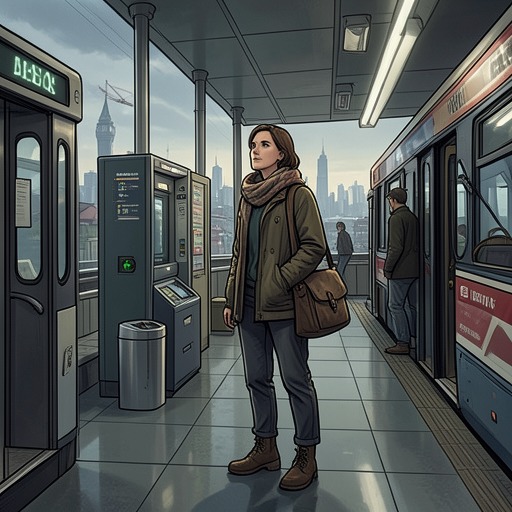
The cab that carries him to the bus makes the transition physical and irreversible. After the horn sounds three times, he enters and finds that the destination is California, where he will confront the person he identifies as his murderer. The movement west thus joins freedom to threat. He has escaped the immediate consequences of his betrayal, but the journey does not erase the past; it transports him toward its most intimate source.
The Address and the Past
California is initially organized around an address. Jensen Brick McCall insists that he needs the location because the abandoned mother he seeks matters to his ability to move forward. The address eventually appears through online surveillance: 352 Aladdin Avenue, in Baldwin Hills, California. What had seemed like a mysterious search for a murderer becomes a search for the birth mother whose absence has structured his identity.
The discovery comes through Facebook, which Jensen Brick McCall treats as an accidental archive of private life. Gang members publicly post their whereabouts, crimes, purchases, and personal routines, allowing police, government agencies, the Drug Enforcement Administration, and the Federal Bureau of Investigation to gather information from their own disclosures. Jensen Brick McCall uses the same stream of images to locate the woman he seeks. Her posts show a prosperous California life with a husband and two children, including birthday, Christmas, and Thanksgiving celebrations. The contrast is stark: the woman’s visible domestic abundance stands against the abandoned child whose life has been defined by questions about why she left.
This use of social media gives California a double character. It is a real place with a precise address, but it is also an image assembled through curated photographs. Jensen Brick McCall approaches not only a person but the public version of her life, a polished surface that must be tested against the concealed history of his birth and abandonment.
A Planned New Life
By the time Jensen Brick McCall is about to leave the bus, California has become more than the location of confrontation. He admits that he has no home and does not yet know what he will do in Los Angeles, but he describes the journey as an act of faith rather than a request for rescue. His betrayal was a desperate move, yet it kept him from being dead two days earlier. The moral cost remains present, but survival has created a narrow opening in which a new identity might be built.
He arrives with practical resources rather than dependence. He has money to start over, a bank account, a savings account, a driver’s license, and security certification. He refuses an offer from Ginger Pearl to stay in her rooming house because he does not want a handout and wants to know that he can thrive through his own efforts. The discipline behind this decision comes partly from lessons attributed to Grace McCall: save money, protect credit, and prepare for a rainy day. While others in Syracuse spend on jewelry, clothes, and sex, Jensen Brick McCall has kept his needs modest and invested in two pairs of dress pants, two white shirts, two ties, and good dress shoes.
California therefore receives a protagonist who is neither empty-handed nor fully secure. His immediate plan is to establish himself in security work, with a backup plan of returning to college for a degree in Security Management. He has been arrested for petty offenses but has avoided felony convictions, making the bus ticket a final opportunity to prevent his criminal past from determining the rest of his life. The state becomes the threshold between a gang-defined existence and a carefully prepared, if uncertain, professional future.
Crenshaw Boulevard and Belonging
The most expansive vision of California comes through a solitary tour of Crenshaw Boulevard. Jensen Brick McCall encounters Terry "NoBrakes" Wroten, buys all of his books, and purchases a designer purse for Ginger Pearl and a belt for Brick, while also thinking about Brick’s meeting with his mother. The street is rendered through sound, movement, color, and public display: music blares from speakers, palm trees line the road, traffic is congested, and a low-rider bounces through the scene. People wear pro-keds, khakis, and plaid shirts; murals and customized bikes turn the neighborhood into a moving visual culture.
This encounter sharply contrasts with the fear that brought Jensen Brick McCall to the state. The same California associated with a hidden address and a dangerous confrontation becomes a place of beauty and sensory abundance. He takes photographs of the mural, notices performers and other artists, and sketches a dancing group in his pad. Art changes his relation to the environment: he is no longer merely tracking a past or calculating how to remain alive. He is observing, recording, and participating in the act of seeing.
His response is unusually direct: California, and especially Los Angeles, makes him feel at home. That feeling does not cancel his homelessness or resolve the question of his birth mother, but it introduces a new form of identity not supplied by family or gang. The state offers a community of streets, music, artists, and movement in which Jensen Brick McCall can recognize himself before the personal confrontation has even been completed.
Narrative Significance
California is the novel’s threshold landscape, where the value of Jensen Brick McCall’s life shifts from threatened survival toward self-directed possibility. The journey begins as an exchange: betrayal of the gang in return for freedom. It then becomes a pursuit of truth, because the precise California address promises access to the woman whose abandonment still blocks his understanding of himself. Finally, the state appears as a lived environment capable of giving him pleasure, work, artistic attention, and a sense of home.
The location also exposes the limits of escape. Jensen Brick McCall cannot simply leave Syracuse and become new; his first purpose in California is to confront the past, and his arrival is haunted by the person he believes caused his deepest wound. Yet the Crenshaw Boulevard sequence suggests that identity can be rebuilt through more than an answer from a parent. California’s streets offer an alternative inheritance: not biological recognition, but the possibility of choosing a future, maintaining independence, and finding beauty in a place that began as a survival route.